White Label CRM for Agencies: How to Choose Between Rent, Rebrand, and Build (2026)
Rent-and-resell, rebrand a lighter suite, or build and own: the 2026 white label CRM decision for agencies, with the reseller-margin math the vendor pages leave out.
Updated on July 21, 2026
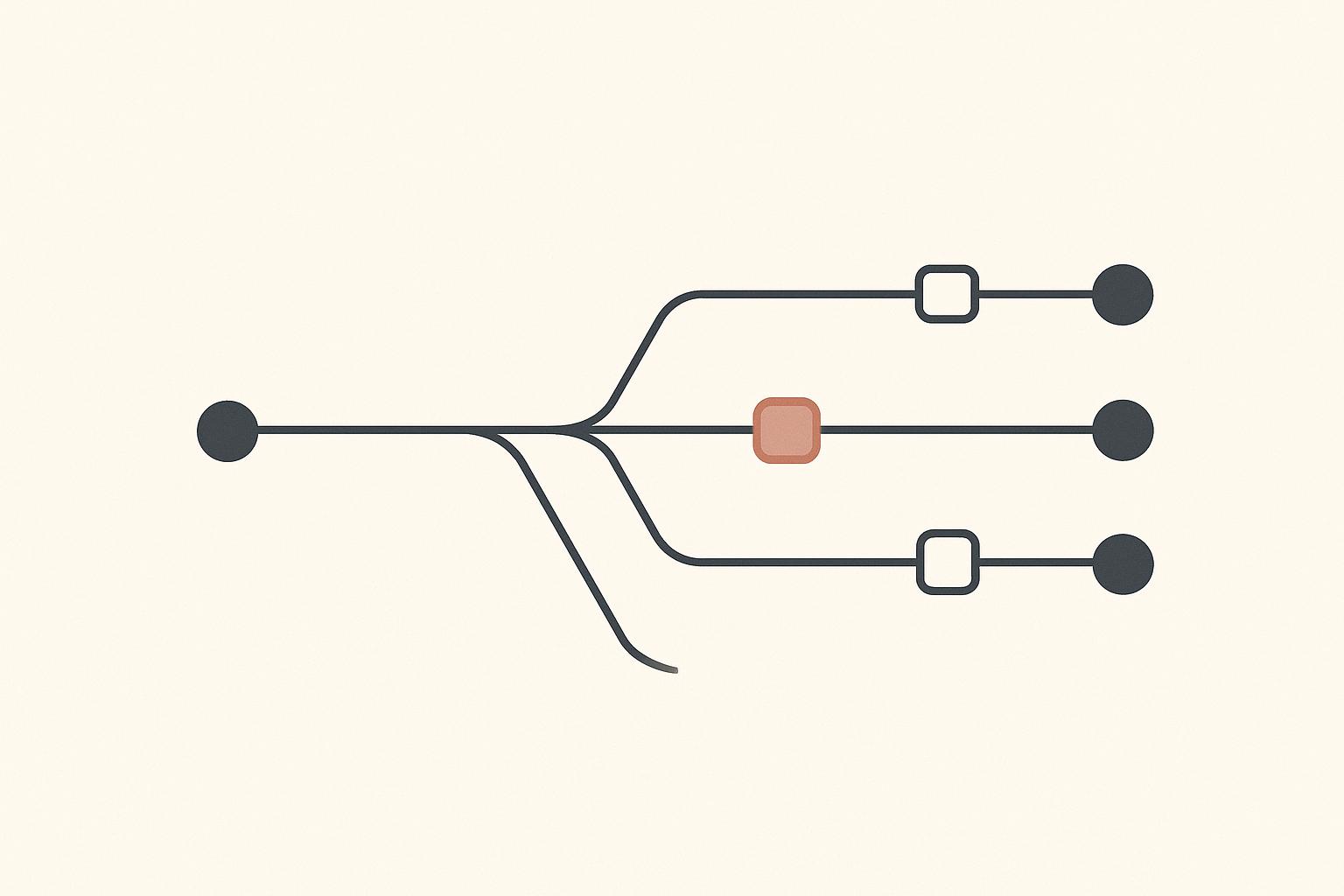
Abstract three-lane pipeline motif on a warm off-white background representing the rent, rebrand, and build white label CRM decision for agencies
On this page
Quick Answer (2026): A white label CRM for agencies is a customer-relationship platform you rebrand under your own logo, domain, and pricing, then resell to clients as if it were software you built. In 2026 you have three real lanes: rent-and-resell an all-in-one suite like GoHighLevel, rebrand a lighter client-ops tool like SuiteDash, or build and own the CRM outright with an AI app builder. The right lane is a margin-and-control decision, not a feature checklist. Rent when you want recurring revenue this quarter; build when the CRM is quietly becoming your product.
Most "best white label CRM" articles are vendor pages or ranked lists. They tell you what to buy. They do not tell you what you keep after the platform fee, or when reselling someone else's software stops making sense. This is the decision framework and the reseller-margin arithmetic behind it.
What "white label CRM for agencies" actually buys you
Strip away the marketing and you are reselling three things, not one:
The software. Pipelines, contacts, automations, sometimes invoicing and a client portal.
The brand wrapper. Your logo, your domain, your login screen. The client never sees the vendor.
The support burden. This is the part the sales page omits. Once your logo is on the login, you are tier-one support. When automation breaks at 9pm, the client calls you, not the vendor.
That third item is why the decision is financial before it is technical. A white label CRM does not just cost the platform fee. It costs the hours you spend being the help desk for software you did not write.
Service agencies needing portals more than pipelines
C. Build-and-own
Your own CRM, no vendor above you
Weeks of build time, near-zero marginal cost
You
Agencies where the CRM is becoming the product
Lane A is dominated by GoHighLevel, whose SaaS mode turns the platform into a product you sell subscriptions to. Lane B is where SuiteDash, Softr, and Knack live: lighter, portal-first, flatter pricing. Lane C used to mean a six-figure custom build. In 2026 it does not, and that is the change worth understanding.
The reseller-margin math nobody prints
Here is the arithmetic that decides the lane. Assume a mid-sized agency reselling a CRM seat to clients at $99/mo.
Lane A, rent-and-resell (GoHighLevel Agency Pro at $497/mo, 2026 pricing):
Scroll to see more
Clients
Client revenue (at $99)
Platform fee
Gross before your time
5
$495
$497
-$2
10
$990
$497
$493
20
$1,980
$497
$1,483
50
$4,950
$497
$4,453
The platform fee is flat, so Lane A is a volume game. Below roughly 5 to 6 resold seats you are underwater; past 20 the fixed fee barely matters and your margin approaches the full resale price. The trap is the middle: agencies sign up, land three clients, and quietly lose money for months.
Lane B, rebrand a lighter suite (SuiteDash flat at $99/mo, 2026): the platform fee is lower and flatter, so break-even arrives at the first or second client. The ceiling is lower too. These tools resell as a branded portal, not a full sales engine, so your per-seat price is usually lower.
Lane C, build-and-own: the cost profile inverts. You pay upfront in build time, then the marginal platform cost per additional client trends toward hosting pennies. At 5 clients Lane C looks expensive. At 50 it is the only lane where you keep close to 100 percent, because there is no vendor taking a cut above you. For the broader business logic of the rebrand model, the neutral primer at Investopedia on white-label products is a clean reference.
The honest summary: rent to start, build to scale. The crossover is not a feeling. It is the point where your flat platform fees plus support hours exceed what an owned system would cost to run. We walked the full pricing side of this in our white label pricing breakdown for agencies.
When each lane wins, by agency profile
Scroll to see more
Your situation
Lane that fits
Why
Marketing agency, want MRR this quarter, non-technical
A (GoHighLevel)
Fastest path to a resellable product, no build
Service or consulting agency, clients want a portal not a pipeline
B (SuiteDash and similar)
Lighter, cheaper, portal-first
Agency past ~20 resold seats, margin squeezed by platform fees
C (build-and-own)
Fixed fees now cost more than owning would
The CRM workflow IS your differentiator
C (build-and-own)
You cannot differentiate on software you rent
Testing whether clients will even pay
A or B
Never build to validate demand you have not proven
That last row matters most. Do not build a custom CRM to find out if clients will pay for one. Rent first, prove the demand, then decide whether to own it. The reseller versus white-label decision sits underneath this: reselling accounts and true white-labeling are different commitments with different margins.
The build-and-own lane changed in 2026
Lane C is the one that moved. Building a custom, owned client CRM used to be a quarter-long project with a developer on payroll. AI app builders compressed that to a matter of weeks, which is why "build" now competes with "rent" on timeline, not just on control.
The honest landscape, balanced:
Lovable and Bolt.new generate Postgres-backed apps you host yourself. Strong for teams comfortable wiring up Supabase and Vercel, and both ship real SQL databases you can migrate freely.
If you want the whole stack in one place, an AI app builder that hands you the source code is worth a look. It ships owned Next.js with built-in auth, database, hosting, and custom domains, and it is the rare builder that is itself white-label: "Your brand, Your domain, Your pricing" (totalum.app/whitelabel, 2026). For an agency that wants to resell a builder as well as a CRM, that is a different shape of offer.
Two honest caveats, because Lane C is not free lunch. First, no AI builder hands you a finished CRM; you get the scaffold and the ownership, then you build the pipeline logic. Second, code portability is not data portability: a builder using a proprietary data layer (TotalumSDK rather than raw PostgreSQL) means porting your data off later is real migration work, and its white-label pricing is quote-only, not published. Weigh that against the free data migration you keep with a Postgres-based build.
Eight checks before you sign any white-label CRM contract
Run this list before your logo goes on anyone's login screen:
Data export. Can you get every contact and record out in a standard format, on demand, without the vendor's help?
Sub-account isolation. If one client leaves, can you offboard their data cleanly without touching the others?
Support boundary. In writing: what does the vendor support, and where does your help-desk burden begin?
Price-change notice. How much warning before the platform fee rises? Flat fees are only stable until they are not.
Branding depth. Login, emails, mobile, and the domain, or just a logo swap? Clients notice a vendor's name in a transactional email.
Client billing. Does the platform bill your clients directly, or do you invoice and reconcile yourself?
Uptime and status. Is there a real SLA, and a status page you can point a client to when something breaks?
Exit path. If you outgrow the tool, what does migrating away actually cost in hours and data?
Formalize the answers. The reseller relationship lives or dies on the contract, which we cover clause by clause in the white-label agreement checklist.
If you take one thing from this:
A white label CRM is a rental until the day the numbers say otherwise. Rent to prove clients will pay, watch the seat count against the flat fee, and build-and-own only when the CRM has stopped being a tool you resell and started being the product your agency actually sells.
Helena Marsh writes DevShopVault's agency operations desk, focused on packaging, pricing, and the build-versus-buy calls that decide agency margin.
Frequently asked questions
What is a white label CRM for agencies?
It is a CRM platform an agency rebrands under its own name, logo, domain, and pricing, then resells to clients as if the agency built it. The underlying software is provided and maintained by a vendor, while the client sees only the agency's brand.
How much does a white label CRM cost in 2026?
It varies by lane. An all-in-one like GoHighLevel's Agency Pro (SaaS mode) is listed at $497/mo in 2026. Lighter portal-first suites like SuiteDash start around $99/mo. Building and owning your own CRM with an AI app builder trades a flat fee for upfront build time and near-zero marginal cost per client.
Is it better to rent a white label CRM or build your own?
Rent to start and to validate that clients will pay; build to scale. Flat platform fees make renting cheapest at low client counts, but past roughly 20 resold seats an owned system usually costs less to run because no vendor takes a cut above you. Never build a custom CRM to test demand you have not yet proven.
What is the difference between reselling and white-labeling a CRM?
Reselling means selling access to a vendor's product, often with the vendor still visible. True white-labeling removes the vendor's brand entirely so the client sees only yours. White-labeling usually costs more and carries more support responsibility, but gives the agency a product that looks genuinely its own.