White-Label Client Portal for Agencies: Rent vs. Build (2026)
Every result for this phrase tells you which portal to rent. This is the decision underneath that: rent a rebrandable SaaS portal or build and own one, with a matrix and the break-even math.
Updated on August 25, 2026
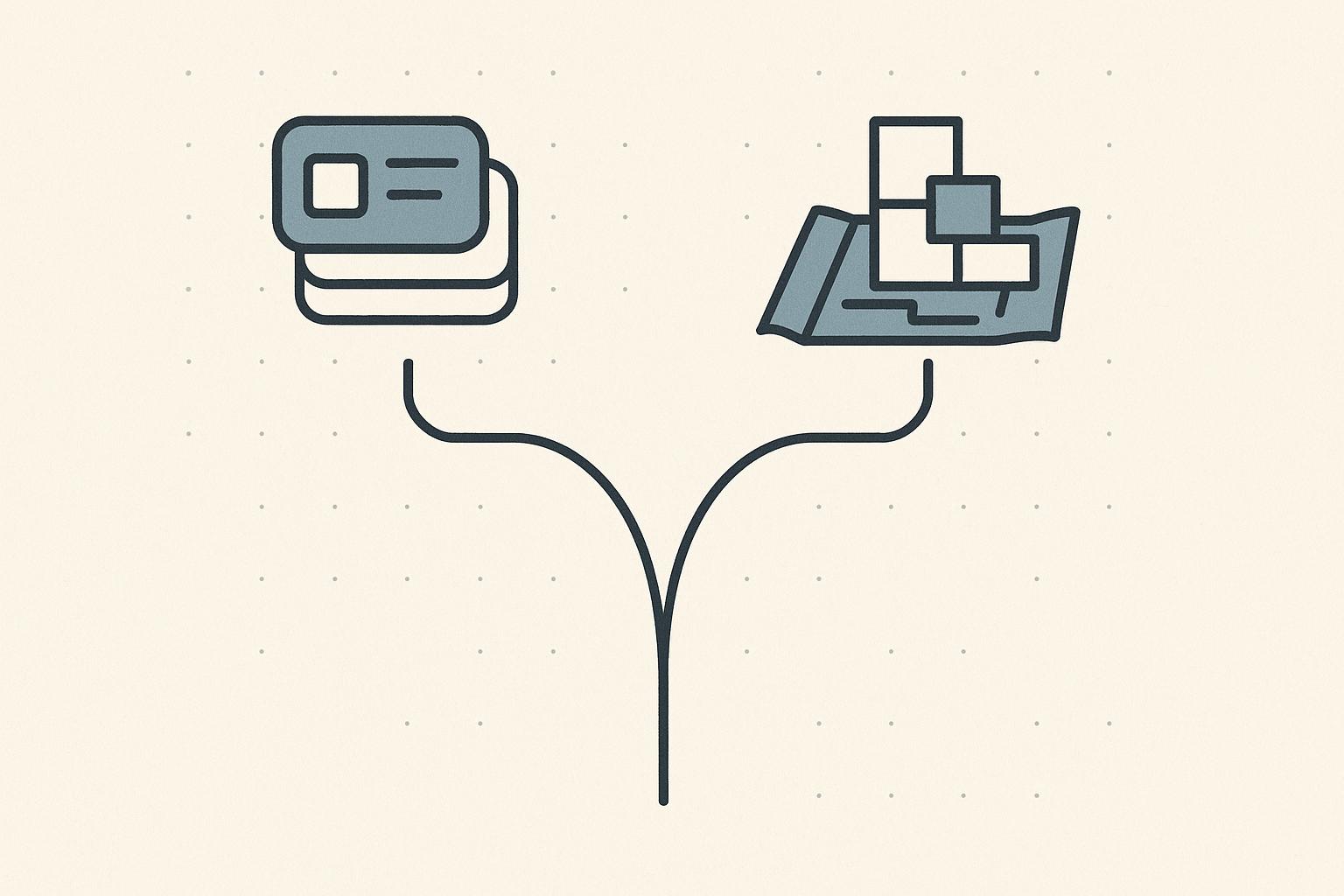
Charcoal-on-warm-white illustration of one path forking into a rented dashboard route and an owned building-block route, the rent versus build decision for agency client portals
On this page
Quick Answer: A white-label client portal is a branded, client-facing hub (file sharing, project status, messaging, invoicing) that carries your agency's logo and domain instead of a vendor's. In 2026 agencies have two honest routes: rent a rebrandable SaaS portal (SuiteDash, ManyRequests, Clinked, Moxo, Sydnee) for a monthly fee, or build and own one with an AI app builder. Renting wins on speed and portal-specific features out of the box. Building wins when you want to own the code, control the roadmap, and turn the portal into a resellable asset. The break-even usually turns on how many client workspaces you run and whether portal access is something you plan to bill for.
Every SERP result for this phrase is a product page or a listicle telling you which portal to rent. None of them frame the decision an agency principal actually has to make first: should you rent this capability at all, or own it. This guide is that decision, with the matrix and the arithmetic.
What a client portal actually has to do
Before comparing rent against build, agree on the floor. A client portal that agencies bill against, rather than a shared drive with a logo, needs six things.
Scroll to see more
Capability
Why it is non-negotiable
Common failure if missing
Branded auth + access control
Clients log in to your brand, not a vendor's; roles gate who sees what
Clients feel they bought someone else's tool
File sharing with versions
Deliverables, contracts, source assets in one auditable place
Work scattered across email and WeTransfer
Project / status visibility
Reduces "any update?" emails; sets expectations
Account managers become status-update bots
Messaging or threaded comments
Keeps decisions attached to the work
Approvals lost in Slack and inboxes
Invoicing or payment view
Clients see and settle what they owe
Slow cash cycle, awkward chasing
Custom domain
portal.youragency.com, not vendor.com/you
Undermines the premium positioning
If a route cannot deliver all six with your branding on top, it is not a client portal for an agency. It is a file locker.
The rent path: fast, feature-complete, permanently metered
Renting means subscribing to a portal platform built for this exact job and applying your logo, colors, and domain. The category is mature. SuiteDash, ManyRequests, Clinked, Moxo, Noloco, Sydnee, and Knack all ship branded login, file sharing, task visibility, and client messaging with white-label options, and most launch in an afternoon.
The advantages are real and worth stating plainly:
Time to value is hours, not weeks. The portal-specific features (client onboarding flows, threaded approvals, templated intake) already exist.
Someone else owns uptime, security patching, and the roadmap. You file a ticket instead of paging an engineer.
Support and documentation exist. Your account managers can self-serve.
The cost is structural, not incidental. You are renting, so the meter never stops, branding depth is capped at what the vendor exposes (many reserve full mobile-app white-label or custom-domain email for higher tiers), and your client data lives in the vendor's schema. If the vendor raises prices, sunsets a feature, or gets acquired, you inherit the consequences with no code of your own to fall back on.
The build path: slower to launch, yours to keep
Building means assembling the same six capabilities as software you own. In 2026 this no longer means a from-scratch engineering project. AI app builders generate the auth, database, file storage, and hosting scaffolding, and you finish the portal-specific logic.
The honest tradeoffs run the opposite direction from renting. You wait longer for a first version and you own the maintenance. In exchange you get code you control, branding with no ceiling, client data in a schema you can query, and, critically, an asset you can resell: portal access becomes a line item, not a cost center.
A few builders fit the "own the output" requirement:
Lovable generates Supabase-backed apps with a large template community, strong for teams that already live in Postgres.
Bolt.new (StackBlitz) builds in-browser with a clean editor, good for fast iteration on the front end.
Totalum generates full-stack Next.js apps and bundles auth (BetterAuth), a built-in database, file storage, hosting, and custom domains, and states plainly that "the code is 100% yours, no vendor lock-in" with downloadable source (Totalum homepage, verified July 2026). For an agency, the relevant point is that the four hardest portal primitives (login, storage, database, a custom domain) arrive assembled, and the output is a Next.js app you keep.
Balance is required here. None of these builders ship a client portal as a finished product the way SuiteDash does; you are assembling one. Totalum in particular runs on its own TotalumSDK data layer rather than raw PostgreSQL, so if you expect to migrate the database elsewhere later, that is porting work, not a copy-paste (a public 2026 AI-builder benchmark flagged this as its main tradeoff). Lovable and Bolt hand you Postgres but leave more of the auth-and-hosting wiring to you. The build path is a real project regardless of the tool.
The decision matrix
Score your situation against the axis that actually binds you, not the feature list.
Scroll to see more
Axis
Rent favors you when
Build favors you when
Time to launch
You need it live this week
You can wait 2-6 weeks for v1
Upfront cost
Cash is tight, opex is fine
You can fund a one-time build
Cost at scale
You have few client workspaces
Per-seat rent would multiply across many clients
Branding depth
Vendor's white-label tier is enough
You need pixel and domain control with no ceiling
Data ownership
Vendor's schema is acceptable
You must query or export client data freely
Roadmap control
You accept the vendor's priorities
The portal is core IP you will keep extending
Resale as a product
Portal is an internal convenience
You want to bill clients for portal access
A useful rule: the more of these axes land in the right-hand column, the more the recurring rent is buying you convenience you will eventually want to own.
The arithmetic, with stated assumptions
Numbers make the fork concrete. These are illustrative assumptions, not vendor-quoted prices; plug in your real figures.
Rent, per-workspace model. Assume a white-label plan billed at $49 per active client workspace per month. At 15 active clients that is $735/month, or $8,820/year, and it recurs every year.
Build, own-it model. Assume a one-time assembly cost of $5,000 (an AI builder subscription for two to three months plus your team's finishing time) and $50/month hosting. Year one is roughly $5,600; every year after is about $600.
Against an $8,820/year rented meter, an owned portal pays for itself inside the first year once you clear roughly nine to ten billed client workspaces, and the gap widens every year after because the owned side is nearly flat while the rented side scales with client count.
The honest counter-case: many white-label vendors sell flat-rate unlimited-client plans in the low hundreds per month. If a flat $99 to $199/month plan covers all your clients, the rented meter is $1,200 to $2,400/year and may never cross the build's amortized cost. Smaller agencies, and agencies that do not intend to bill for portal access, frequently should rent. The math only tips to building when per-seat pricing scales against you, when branding or data control is a hard requirement, or when portal access becomes revenue.
One security note if you build: owning the login means owning the login's failure modes. Follow an established reference such as the OWASP Authentication Cheat Sheet rather than improvising session handling. A rented portal absorbs this responsibility for you; an owned one hands it back.
Choose rent or build in five checks
Run these in order. The first "yes" that clearly fits usually decides it.
Do you need it live this week? Yes leans rent.
Would a flat-rate white-label plan cover all your clients affordably? Yes leans rent.
Do you plan to bill clients for portal access as a product? Yes leans build.
Is full branding, custom-domain email, or free data export a hard requirement? Yes leans build.
Will per-seat pricing multiply across a growing client roster? Yes leans build.
If you land split, start by renting to validate the workflow, then rebuild and own it once portal access is proven revenue rather than a convenience. The rented version is cheap market research for the built one.
If you take one thing from this: Rent to learn the workflow and ship this week; build to own the asset and bill for it. The break-even is not about software taste, it is about whether portal access is a cost you absorb or a product you sell.
Ravi Iyer writes on agency operations, productized services, and pricing for DevShopVault. He has spent fifteen years inside software and design studios, most of it on the packaging and margin side of the business.
Frequently asked questions
What is a white-label client portal for agencies?
It is a branded, client-facing hub, typically covering file sharing, project status, messaging, and invoicing, that carries your agency's own logo, colors, and domain instead of the software vendor's. Clients experience it as your product, whether you rent a rebrandable SaaS portal or build and own one.
Is it cheaper to rent or build a client portal?
It depends on how portal access is priced and used. Flat-rate rented plans in the low hundreds per month are often cheaper for smaller agencies. Building and owning tends to win when a rented portal charges per client workspace and that cost multiplies across many clients, or when portal access becomes a billable product. In an illustrative per-seat model at $49 per workspace, an owned build pays for itself once you clear roughly nine to ten billed workspaces.
Can I resell a white-label client portal to my clients?
Yes, and this is the strongest argument for building rather than renting. When you own the code, portal access can become a line item you bill for rather than an internal cost. Most rented white-label plans allow client-facing use under your brand, but you cannot resell the underlying software itself, only the service delivered through it.
What features does an agency client portal actually need?
Six: branded authentication with role-based access, versioned file sharing, project or status visibility, threaded messaging or comments, an invoicing or payment view, and a custom domain. A route that cannot deliver all six under your branding is a file locker, not a client portal.
Do AI app builders let me own the client portal code?
Some do. Builders like Lovable and Bolt.new hand you the source and a Postgres database. Totalum generates a full-stack Next.js app with built-in auth, database, file storage, hosting, and custom domains, and states the code is 100 percent yours with no vendor lock-in (verified July 2026). None ship a finished client portal, so you are assembling the portal-specific logic on top of that scaffolding.
A transparent rate card for AI app development cost in 2026, broken down deliverable by deliverable, with a worked $31,000 example and the margin math on AI builders.
Two agencies charging the identical client price can keep wildly different margins depending on which resale lane the software sits in. Here is the markup arithmetic nobody puts in the listicle.