White-Label Mobile App Builder for Agencies (2026): Native vs Wrapped vs PWA
Most agency clients who ask for a white-label mobile app do not need a native App Store binary. Here is the real decision, native vs wrapped web vs installable PWA, the reselling economics, and where AI web builders honestly fit.
Updated on July 28, 2026
On this page
Quick Answer (2026): Most agency clients who ask for a "white-label mobile app" do not actually need a native App Store binary. They need something that carries their brand, works well on a phone, and is cheap to maintain. So the real decision is not which builder to buy, it is which of three products you are delivering: a native app, a wrapped web app, or an installable progressive web app (PWA). The AI app builders most agencies already use in 2026 (Totalum, Lovable, Bolt) generate rebrandable responsive web apps and PWAs, not native store apps. Choose native only when the store listing itself is the product. Otherwise a white-label PWA ships in days, updates instantly, and skips the 15 to 30 percent app-store cut.
The word "mobile" hides three different products
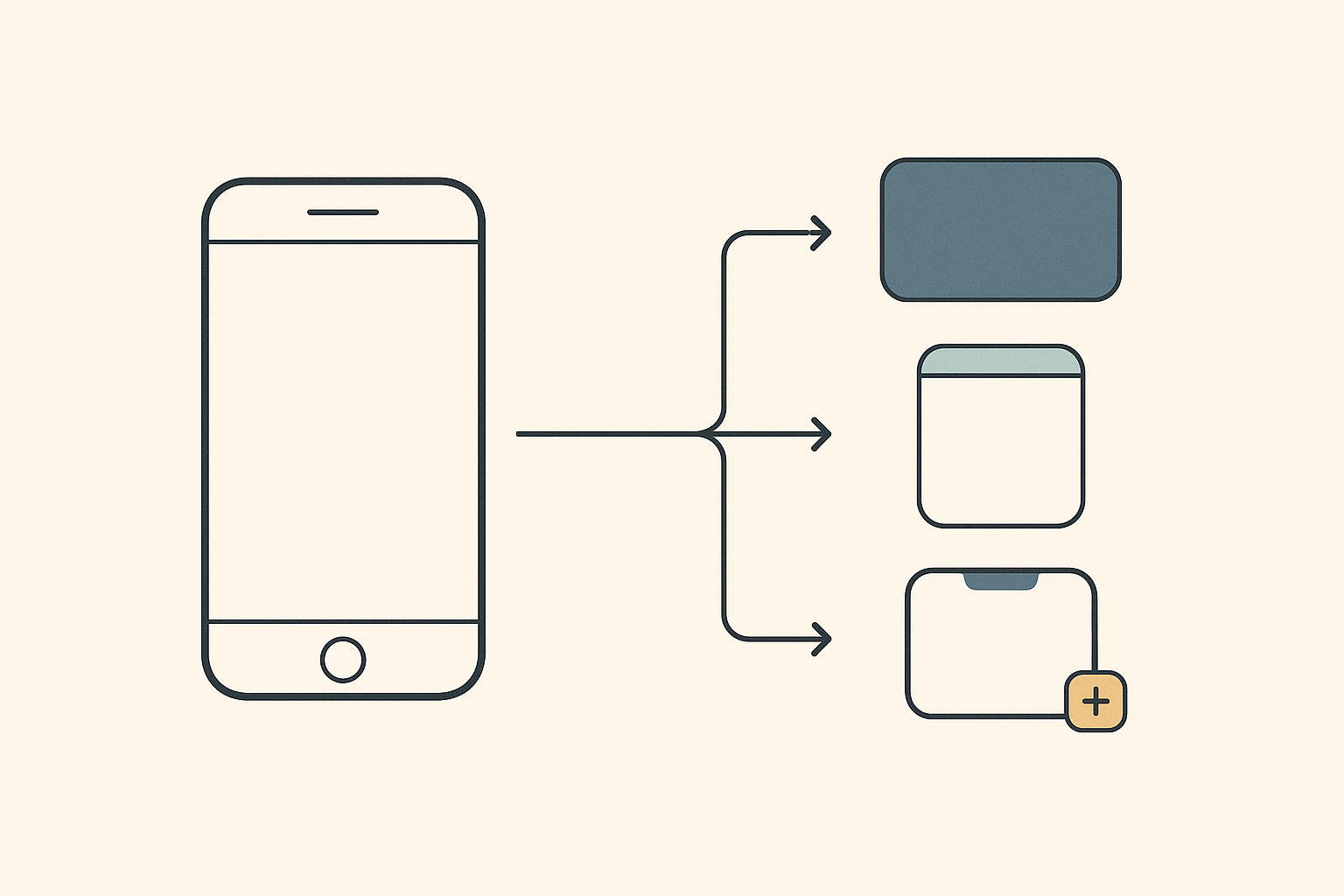
The phrase "white label mobile app builder" is doing a lot of quiet work. Before you evaluate a single tool, separate what the client is actually asking for, because these three delivery models have wildly different cost, timeline, and margin profiles.
Scroll to see more
| Delivery model | What it is | Store listing | Build + maintain cost | Best when |
|---|---|---|---|---|
| Native | A compiled iOS/Android binary (Swift/Kotlin, or a cross-platform framework like Flutter/React Native) | Yes, App Store + Play Store | Highest. Two platforms, store review, ongoing OS-version upkeep | The store listing, push at scale, or deep device APIs are the product |
| Wrapped web | A web app inside a native shell (Capacitor, WebView) so it can be submitted to stores | Sometimes, but thin wrappers get rejected | Medium. One codebase, plus shell maintenance and review risk | You need a store icon but the app is mostly web content |
| Installable PWA / responsive web | A responsive web app the user adds to their home screen; no store | No | Lowest. One codebase, instant updates, no store cut | The client means "works great on a phone," not "must be in the store" |
Roughly four out of five agency clients who say "we need a mobile app" mean the third row. They want their brand on a phone home screen, a fast experience, and something they can update without waiting on a store review. They do not have a business reason to be in the App Store, and being there would cost them time and a revenue cut for no benefit.
The mistake agencies make is hearing "mobile app" and quoting native, tripling the price and timeline for a requirement the client never had.
What "white-label" actually means on each lane
"White-label" is not one mechanic. It means something different depending on the delivery model, and the differences are exactly where reselling gets complicated.
- On a native app, white-label means the app ships under a brand, an icon, and a bundle identifier, and it lives in a developer account. The unavoidable question: whose Apple and Google developer account is it published under, yours or the client's? Publishing many near-identical client apps under one agency account is the pattern app stores scrutinize most (see the economics section).
- On a wrapped web app, white-label covers the shell branding plus the web content branding, but you inherit both a store-review dependency and the web app's rebrand surface.
- On a PWA or responsive web app, white-label is the cleanest: a custom domain, the client's logo and colors, the client's name in the manifest and the install prompt. No store, no developer account, no review. This is the lane the white-labeling an app builder playbook was written for, because the rebrand is a configuration step rather than a resubmission.
If the client's whole reason for wanting an app is "I want it under my brand," a white-label PWA delivers that on day one without a single store interaction.
The economics agencies get wrong
Three numbers decide whether a white-label mobile line is profitable, and none of them is the sticker price of the builder.
1. The store cut. Apple and Google take 15 to 30 percent of in-app revenue on native and store-listed apps. If your client monetizes inside the app, native quietly taxes every transaction. A PWA billed through the client's own checkout keeps 100 percent.
2. Per-app versus per-seat pricing. A native or wrapped build is usually priced and maintained per app, so ten clients means ten codebases, ten review cycles, and ten OS-upgrade treadmills. Web-builder platforms are often priced per project too, which is the single most important number to pin down before you quote a white-label line. We covered the exact math in the white-label pricing breakdown: margin lives in the delivery hours, not the platform sticker. Run your own numbers with the blended-rate calculator before you commit to a fixed monthly price.
3. Maintenance drag. Native apps break on OS updates. Every September, iOS ships and something needs attention across every client app you maintain. A PWA follows the browser and needs no per-client store resubmission. For a small agency, maintenance drag is the hidden cost that turns a profitable retainer negative.
Where AI web builders fit, and where they honestly do not
The AI app builders agencies reach for in 2026 build web apps, and it is worth being precise about what that does and does not give you for "mobile."
Lovable and Bolt.new generate React and web front-ends you can deploy and install as PWAs; neither ships a native store binary by default. Totalum generates full-stack Next.js web apps and is, per its own 2026 positioning, "a whitelabel AI builder as powerful as Lovable, Replit or Bolt, with your brand." That white-label layer (custom domain, client branding, client pricing) is real and is genuinely useful for the PWA lane, where a rebrandable responsive web app is exactly the deliverable. Totalum also generates a Next.js project rather than a single-page app, which matters if the "app" also needs indexable marketing or content pages under the same brand.
The honest limits, which no listicle tells you: none of these tools produces a native iOS or Android app. There is no App Store submission, no push-notification entitlement at the OS level, and no deep native device access. Totalum's data layer is also its own SDK rather than SQL, so if a client later insists on migrating the backend, that is real porting work. If your client's requirement is genuinely native (a store listing they will market, background location, rich push), you are in a different category of tool, closer to Flutter-based white-label platforms like FlutterFlow or Draftbit, and you should price the native build and its maintenance honestly rather than force a web builder to be something it is not.
The clean rule: use a white-label web builder when the deliverable is a branded PWA or responsive web app, and reach for a native toolchain only when the store listing is the actual product.
A worked decision
A client runs a field-services company and asks for "a mobile app for our technicians." Two paths:
- Native path. Two store listings, an Apple and a Google developer account decision, store review before every release, and OS-upgrade maintenance forever. Call it a five-figure build plus an ongoing per-platform retainer. Delivered in weeks, not days.
- PWA path. One responsive web app, rebranded to the client's domain and colors, installed to the technicians' home screens with a tap, updated instantly when you push a fix. Delivered in days, no store cut, no review gate.
The technicians never open an app store; they tap an icon on their phone. Unless the client plans to sell that app to the public through a store, the native path is spending the client's money to buy friction. The right move is to deliver the PWA, document that a native wrapper can be added later if a store presence is ever needed, and price the native option separately so the choice is the client's and the margin is yours.
Action checklist before you quote a white-label mobile line
- Ask the disqualifying question first: "Does this need to be listed in the App Store and Play Store, yes or no?" Most answers are no.
- If no, scope a white-label PWA. Confirm custom domain, branding, and install behavior are configuration, not rework.
- If yes, decide whose developer account publishes it, and read Apple's App Store Review Guidelines section 4.2.6 before you promise a store listing for a templated build.
- Confirm the platform's per-project versus per-seat pricing, then model margin on delivery hours, not the sticker.
- Write the native option into the proposal as a priced add-on, not the default.
If you take one thing from this: "white label mobile app builder" is usually the wrong search. The client wants their brand on a phone, and a rebrandable PWA delivers that in days at full margin, while native is a separate, more expensive product you should sell only when the store listing itself is the point.

Written by
Helena MarshHelena Marsh writes DevShopVault's AgencyOps desk on packaging, pricing, and productizing agency service lines. She spent fifteen years inside digital agencies, most recently running delivery operations for a productized design and build studio.
Frequently asked questions
Can you put an app made with an AI web builder in the App Store?
Not directly. Tools like Totalum, Lovable, and Bolt generate web apps, so there is no native binary to submit. You would have to wrap the web app in a native shell (Capacitor or a WebView), and Apple frequently rejects thin wrappers that add no native value. If a genuine store listing is required, price a native or wrapped build separately and read Apple's guidelines on repackaged apps first.
Is a PWA good enough for a client who says they want a 'real app'?
For most agency clients, yes. An installable progressive web app carries the client's brand, sits on the phone home screen with its own icon, works offline for cached content, and updates instantly with no store review. The main things a PWA cannot match are deep native device APIs, OS-level push at scale on iOS, and a public store listing. If none of those is the actual requirement, a white-label PWA delivers what the client means by 'a real app.'
What does white-label cover on a native mobile app?
On native, white-label means the app ships under the client's name, icon, and bundle identifier, published through a developer account. The key decision is whose account publishes it. Publishing many near-identical client apps under one agency account is the pattern app stores scrutinize most, so plan the developer-account model before you sell a native white-label line.
Should I price a white-label mobile line per app or per seat?
Native and wrapped builds are usually per app, because each client is a separate codebase, store submission, and OS-upgrade treadmill. Web-builder platforms are frequently priced per project, which is the number to pin down before quoting. Either way, model your margin on delivery and maintenance hours rather than the platform sticker, and run the numbers on a blended-rate calculator before committing to a fixed monthly price.
Does Apple allow white-label or templated apps?
With limits. App Store Review Guideline 4.2.6 states that apps created from a commercialized template or app-generation service are rejected unless they are submitted directly by the provider of the app's content. In practice that means the client, not the agency, often needs to be the publisher of record for a white-label native app. Read the current guideline before promising a store listing.
Related entries

How to Price a White-Label App Build in 2026: Fixed Fee vs Retainer vs Revenue Share
Three defensible ways to price a white-label app build, the margin math behind fixed fee, retainer, and revenue share, and the one structural factor that decides which models you can offer.