Fork an Open-Source AI App Builder: The Self-Hosted White-Label Path (2026)
Renting a white-label builder means the vendor keeps the code. This is the other route: fork an open-source, MIT-licensed builder, connect one API key, and resell multitenant client apps you actually own.
Updated on August 25, 2026
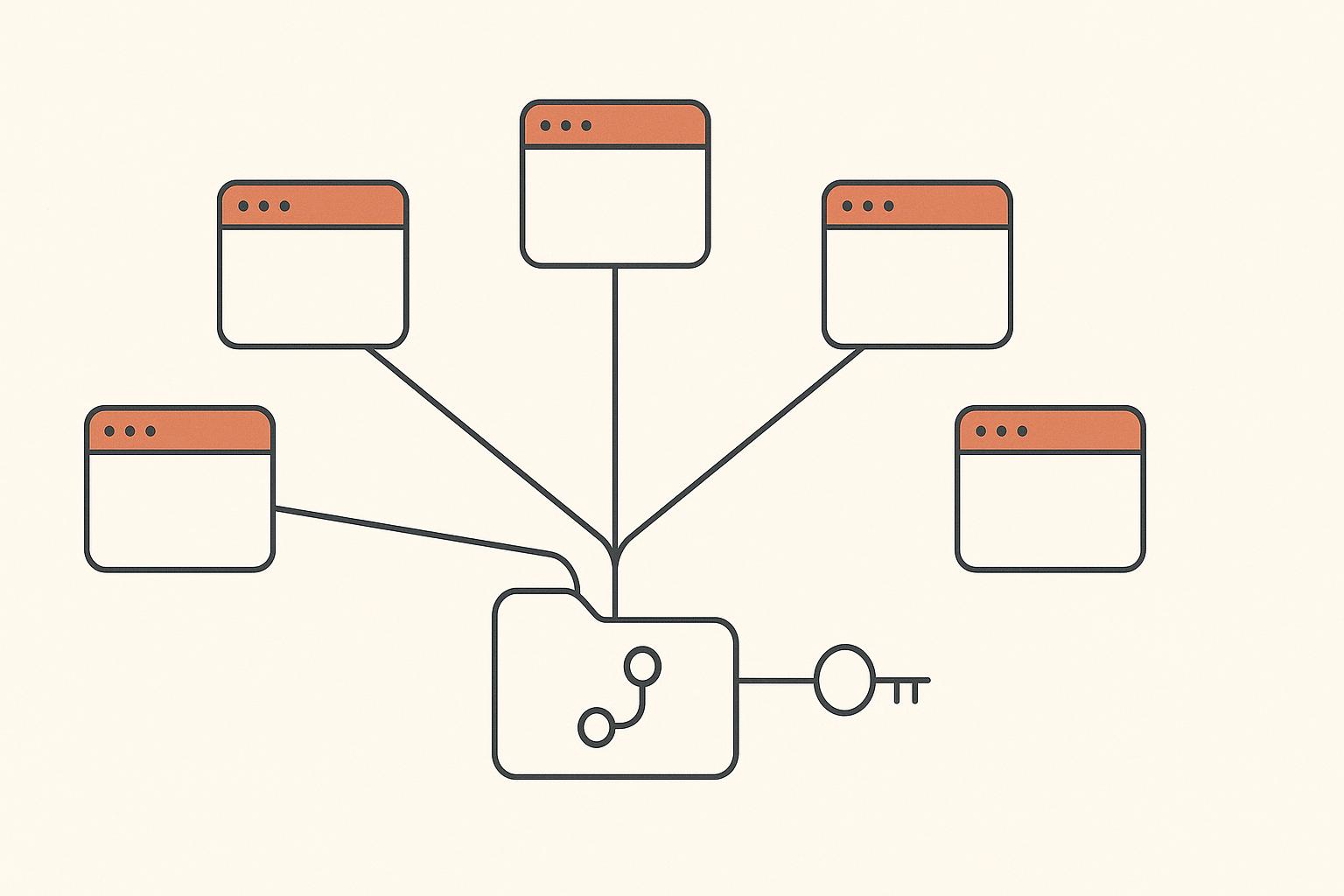
Warm-white flat illustration of a single source-code repository node with an API key, its branches fanning out to four rebranded client app windows, representing one multitenant white-label AI app builder
On this page
Quick Answer
Forking an open-source builder is the second of the two routes an agency can take to resell an AI app builder under its own brand. This guide covers that route using ai-app-builder-open, an MIT-licensed builder you self-host and connect to a single API key, so every client app runs as its own isolated tenant under your agency's name. Renting a closed platform is faster to start; forking and owning gives an agency the deeper white-label control and recurring margin that closed platforms cap.
In plain English: what embedding the builder means
Skip this section if you already ship code. If you run the agency but do not write the software yourself, here are the four words the rest of this piece leans on.
White-label means the tool carries your brand, not the vendor's. Your client never sees the name of the company that built the underlying engine.
Fork means taking a public, freely licensed copy of someone's software and making it your own to host and change. The builder used here, the open-source ai-app-builder-open repository, is published under an MIT license, the permissive legal wording that lets you use it commercially and rebrand it.
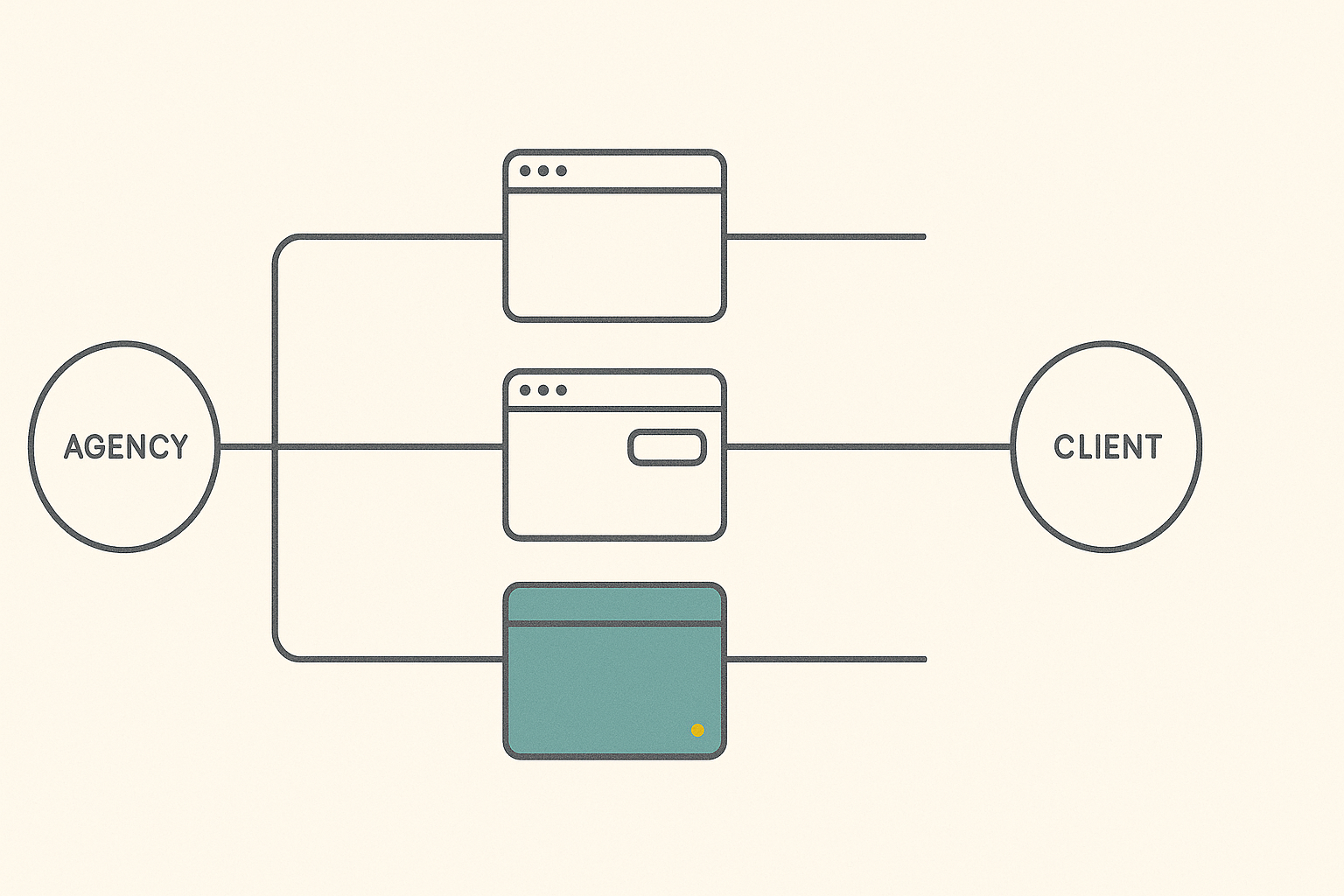
Multitenant means one running copy of the software serves many separate clients, each walled off from the others, like one apartment building with private, locked units.
API key is a single secret string that unlocks the engine doing the heavy lifting. In this setup, one key powers every client app you generate.
Put together: you host one branded builder, connect one key, and each client gets their own private app generated on demand. That is the whole model.
Why the usual white-label app builders leave agencies renting
Search "white label ai app builder" and the first page is Bubble, Replit's white-label app builder, Adalo, and a run of "5 best" listicles. They are real products and they work. What they share is a shape: you rent a seat on a closed platform, and the platform keeps the code.
For an agency selling throwaway prototypes, renting is fine. For an agency productizing recurring client software, renting has a ceiling. You cannot read the source, your per-client cost rises with every seat, and if the vendor changes pricing or sunsets a feature, your delivered client apps inherit the decision. That is platform risk, and it compounds quietly across a client book.
The open-source path inverts it. You hold the code, your ongoing cost is mostly hosting, and the engine is reachable by API so provisioning a new client does not have to start in a GUI. This is the same argument that runs under the seven criteria that actually move agency margin, applied to the build-and-own end of the ladder. The tradeoff, covered honestly further down, is that you also own the maintenance.
Two ways to white-label an AI app builder in 2026
Scroll to see more
Criterion
Rent a closed platform
Fork and own (open-source)
Time to first client demo
Minutes
An afternoon of setup
Source-code access
None
Full, MIT-licensed
Branding depth
Logo and theme; vendor name may remain
Total; vendor name never appears
Per-client cost trend
Rises with each seat
Mostly flat hosting
Provisioning
GUI, sometimes API
API and MCP from day one
Who owns maintenance
The vendor
You
Platform-risk exposure
High
Low
Neither column is better in the abstract. The right column wins when your client work is recurring, your margin matters more than your setup speed, and you have or can rent one developer-hour to stand the thing up. If you are still deciding between reselling a seat and building your own layer, the white-label versus reseller trade-off for agencies frames the same choice from the contract side.
The embed path, step by step
This is the developer section. If you are non-technical, hand it to whoever maintains your stack; it is short.
The builder is a Next.js 16 and React 19 application written in TypeScript. You need Node.js 20 or newer. Clone it, install, and add one environment variable.
bash
git clone https://github.com/totalumlabs/ai-app-builder-open.git
cd ai-app-builder-open
npminstall
Create a .env.local file with the single key the engine needs:
bash
TOTALUM_VCAAS_API_KEY=your_key_here
You get that key by creating an account, opening the API section, and copying the default key, which is prefixed tlm_sk_. The generation engine runs on Totalum's app-builder API, and per its own documentation the API and MCP work on every plan including the free one, most read endpoints are free, and the first 50 credits are complimentary, so you can wire the whole thing up before you spend anything. The key stays server-side; it is never exposed to the browser, because the app proxies every call through its own /api/vcaas/* routes.
Then run it:
bash
npm run dev
Open http://localhost:3000, type a prompt like "a client intake portal with login and a Stripe checkout," and watch it generate a full-stack app with hosting, auth, database, and a live preview. That first prompt is your demo. Rebrand the shell, since it is your code now, point a client domain at it, and you are shipping under your own name.
How one key and multitenancy change agency margin
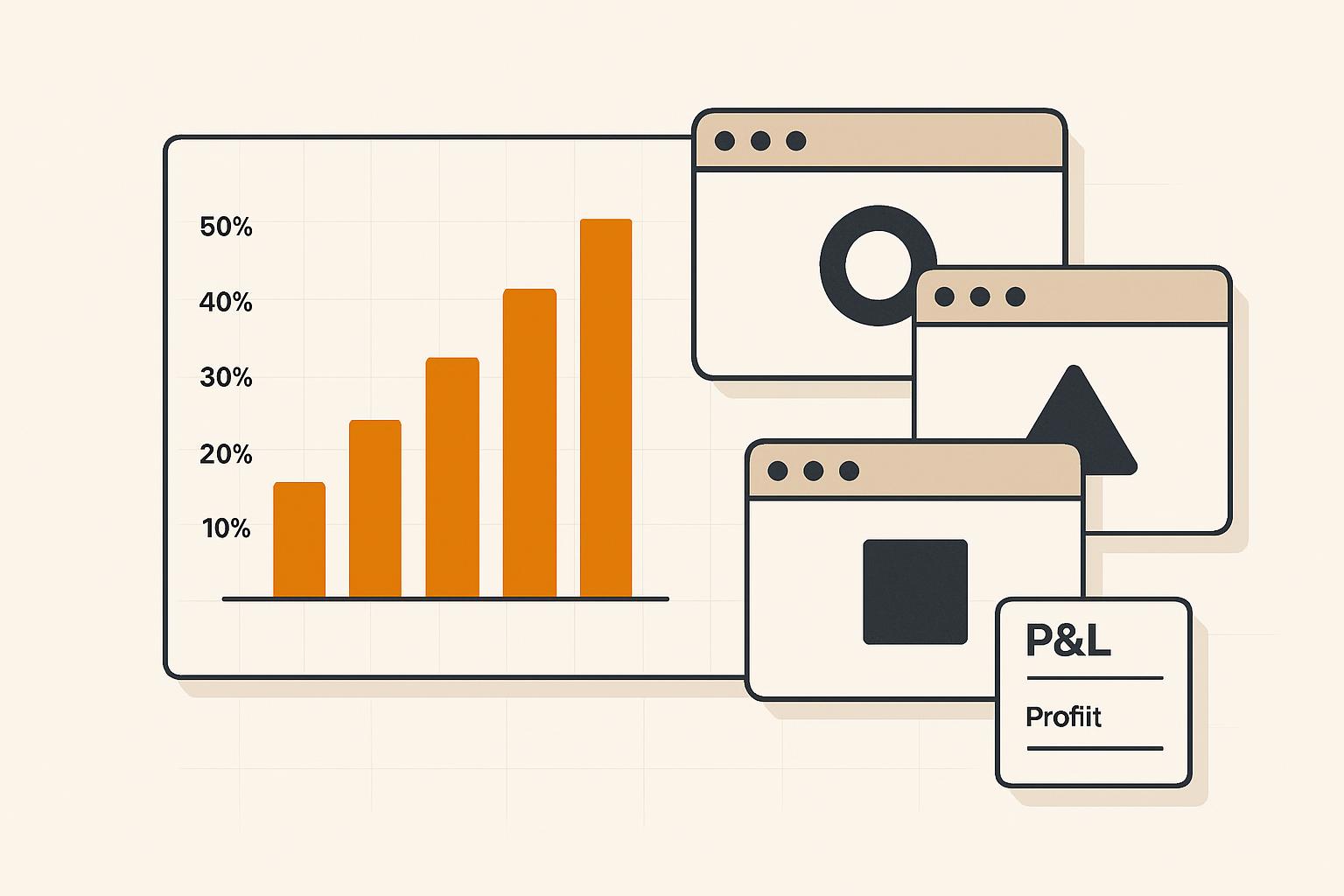
Here is the part that hits the P and L. In the rented model, each new client is a new seat, and seats stack on your cost base. In the fork-and-own model, each generated client app runs as its own isolated project behind the same key, so multitenant separation is built in and your marginal cost per client is hosting, often a few dollars a month.
Walk the arithmetic on ten clients at $300 a month each, $3,000 in recurring revenue:
Rented per-seat platform at, say, $40 per client per month: $400 in platform cost, roughly 87 percent gross margin, and the cost line grows every time you add a client.
Fork-and-own, with hosting near $4 per client per month plus your API credit usage: cost in the low tens of dollars, comfortably above 95 percent recurring margin, and the cost line barely moves as clients grow.
The gap is not dramatic at ten clients. At fifty it is the difference between a cost base that scales with your book and one that essentially does not. That is the whole financial argument for owning the builder rather than renting it. What you pay for it is the one-time build and the maintenance you take on.
Where this approach loses
Owning the code is not free of downsides, and pretending otherwise would make this a brochure.
The repo is young. ai-app-builder-open sits at roughly 18 GitHub stars in July 2026. It is real and MIT-licensed, but it is early, and early means fewer battle-tested edge cases than a platform with years of production miles.
A more mature local-first option exists. If your priority is a self-hosted builder with a larger community today, Dyad is further along as a local-first, bring-your-own-key desktop builder. For agencies that want the app to run entirely on a client's own machine with no hosted engine, Dyad is the more proven pick right now.
You own the maintenance. Forking means you patch it, you upgrade Next.js, you keep it running. Renting hands that to the vendor. If you do not have a developer-hour to spare, rent.
The data layer is proprietary. The generated apps use a built-in SDK database rather than raw PostgreSQL, so migrating a client's data fully off-platform later is more work than a plain Postgres export. The code is yours; the data layer still needs porting work.
Choosing between these is a client-work question, not a taste question. The production-ready checklist for AI app builders in agency client work is the right lens: pick the open-source embed path when recurring margin and brand control matter more than setup speed and you can own maintenance; pick a rented platform, or Dyad's local-first model, when those priorities flip.
An agency embed checklist
Before you resell anything built this way, confirm:
Licence read. MIT lets you rebrand and resell; keep the licence file in your repo and you stay compliant.
Key stays server-side. Confirm the API key never ships to the browser; the proxy handles this, do not undo it.
Branding sweep. Replace the shell's name, logo, and email touchpoints so the vendor name appears nowhere a client can see.
Per-client isolation tested. Generate two client apps and confirm one cannot see the other's data before you sell tenant two.
Cost model on paper. Model your hosting and API credit cost at your current client count and at three times that, so a growth spurt does not invert your margin.
Maintenance owner named. Decide who patches and upgrades the fork before it sits in front of paying clients.
If you take one thing from this: renting a white-label builder rents you a brand; forking an open-source one buys you the codebase, and for recurring client work the codebase is where the margin and the leverage actually live.
Helena Marsh is the founding editor of DevShopVault. She writes on agency operations, packaging, and the tooling decisions that decide software-studio margin, drawing on years spent running delivery inside product and design agencies.
Frequently asked questions
What is a white-label AI app builder?
A white-label AI app builder is a prompt-to-app platform an agency resells under its own brand, controlling the logo, client domains, and billing while the underlying generation engine stays invisible to the client. In 2026 you can either rent one as a closed platform or fork an open-source builder and own the code.
Can I legally resell an open-source AI app builder under my own brand?
Yes, if the licence permits it. The ai-app-builder-open project is published under the MIT licence, which allows commercial use, modification, and rebranding as long as you keep the licence file in your copy. That is what makes forking it and reselling it under your agency's name legitimate.
How much does it cost to run the open-source builder?
The code itself is free under MIT. The running costs are hosting, often a few dollars per client per month, plus API credits for the generation engine. Per the API documentation the API works on every plan including the free one, most read endpoints are free, and the first 50 credits are complimentary, so you can build and test before spending.
Is forking an open-source builder better than renting a platform like Bubble or Replit?
It depends on the work. Renting is faster to start and hands maintenance to the vendor, which suits throwaway prototypes. Forking gives full source-code ownership, deeper white-label control, and a flatter per-client cost, which suits recurring client software, at the price of owning the maintenance yourself.
Do my clients get isolated, multitenant apps?
Yes. Each app you generate runs as its own isolated project behind the same API key, so client data is separated by default. You should still generate two test clients and confirm one cannot see the other's data before you sell a second tenant.
Most best-of lists score AI app builders on demo flash. The criteria that move agency margin are different: white-label depth, code ownership, programmatic provisioning, and how billing flows. A seven-criteria scorecard with the 2026 agency-resale math.
A decision framework for agencies choosing between white-label, reseller, and referral partnership models on the platforms behind their AI builds, with a six-axis matrix and worked margin math.
A six-criterion tier list of the AI app builders that survive a client handoff in 2026, scored for source-code ownership, deployable target, bundled vendors, MCP provisioning, white-label flow, and the maintenance cost the client inherits.